The Costly Impact of Northeast Ohio’s Freeze-Thaw Cycle on Commercial Buildings
If you’ve ever seen a small crack turn into a major gap in your building, you’ve seen the freeze-thaw cycle at work. The constant shift of temperatures can wreak havoc for commercial buildings, and it especially poses problems for property owners in Northeast Ohio.
Simply put, the damage caused by the freeze-thaw cycle is real, repeatable, and expensive. Commercial building owners can’t stop the weather, but they can take steps to protect their investments. Let’s break down the destructive impact of the freeze-thaw cycle, and how you can limit its impact on your properties.
What is the Freeze-Thaw Cycle?
The freeze-thaw cycle refers to what happens when temperatures rise and fall about the freezing point. Water freezes at 32 degrees Fahrenheit, and thaws when temperatures rise above that point.
That distinction is important because every time that water freezes, it expands by approximately 9%. Any water that sneaks into hairline cracks and other gaps in your building envelope will then expand and contract as temperatures waver above and below freezing. That expansion pushes outward on whatever contains it, leaving a bigger gap over time.
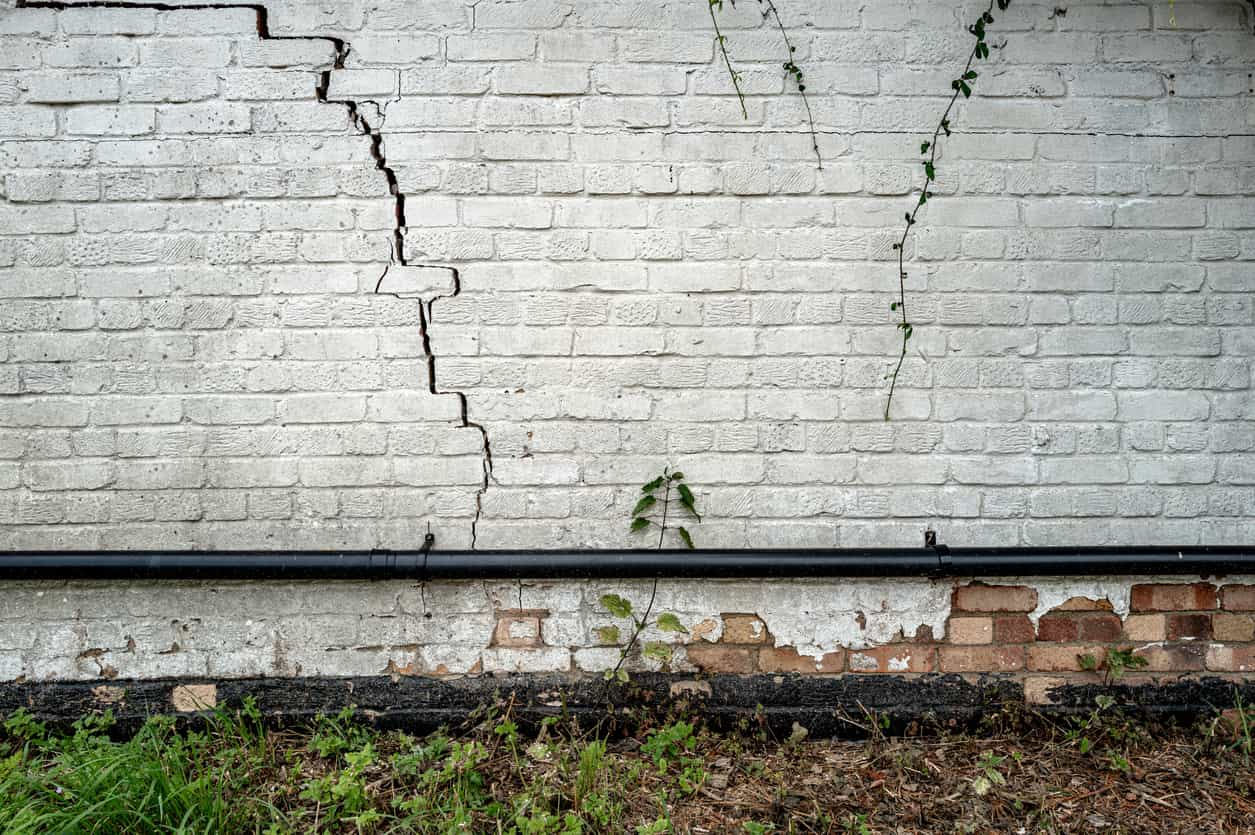
“You can have a crack that’s an eighth of an inch wide and not even notice it, let alone be able to see it,” explains Michael Tomasone, president of Southwest Companies. “That same crack is subject to freeze-thaw every night, and over a few winter seasons, it’ll grow to a half inch or more.”
Why Northeast Ohio is Especially Vulnerable to Freeze-Thaw
While the freeze-thaw cycle affects buildings in just about any climate. Northeast Ohio is especially at risk. According to Michael, Northeast Ohio’s freeze-thaw effect can last from early fall all the way to late spring. That’s roughly half the year where the weather fluctuates enough to cause damage that lasts well beyond the end of the cycle.
“If our buildings were humans, I think they all would have major arthritis,” Michael jokes. “Northeast Ohio specifically is one of the harshest freeze-thaw points in the country by far.
The region’s frequent swings in temperature can lead to dozens of freeze-thaw events per season, the environmental equivalent of bending a paper clip back and forth until it snaps. That constant fluctuation between freezing and thawing turns minor issues into real failures: wider cracks, split roof seams, peeling paint, and countless other problems.
What compounds these challenges is that the impact of the freeze-thaw lasts beyond when the low temperatures finally stay above 32 degrees. The moisture doesn’t go anywhere once it’s in your building, so your structure stays saturated with water even when the weather is warm.
Building Materials at Risk
Every part of a commercial building’s exterior can fall victim to freeze-thaw damage. Once that moisture gets inside the building envelope, it can then cause issues throughout your structure.
Below, we break down the key areas at risk, what can go wrong, and how to mitigate the damage.
Exterior Paint and Protective Coatings
What happens:
Fluctuating winter temperatures can cause paint to crack or peel if it can’t handle regular expansion and contraction. The resulting damage can create tiny openings that allow moisture to seep into your building envelope and create more damage.
Common signs of freeze-thaw damage on painted exteriors include:
Cracking
Flaking
Peeling
Blistering
Exposed substrates
Why it matters:
Commercial painting may seem like a purely cosmetic service, but it actually serves as a protective skin for your building. Once paint fails, the substrate takes on water. That intrusion accelerates rust on steel, rot in wood, and spalling in masonry, which all raise the stakes from a paint project to a building-envelope repair.
How to address it:
Treat paint as a waterproofing layer and plan for preventative painting to protect your building. Most commercial paint systems will last between 7 to 10 years, but it’s a good idea to have your paint checked earlier than that to spot early issues and prevent problems. This is especially true in Northeast Ohio where the weather can degrade paint films more quickly than other regions
Roofing (TPO, EPDM, etc.)
What happens:
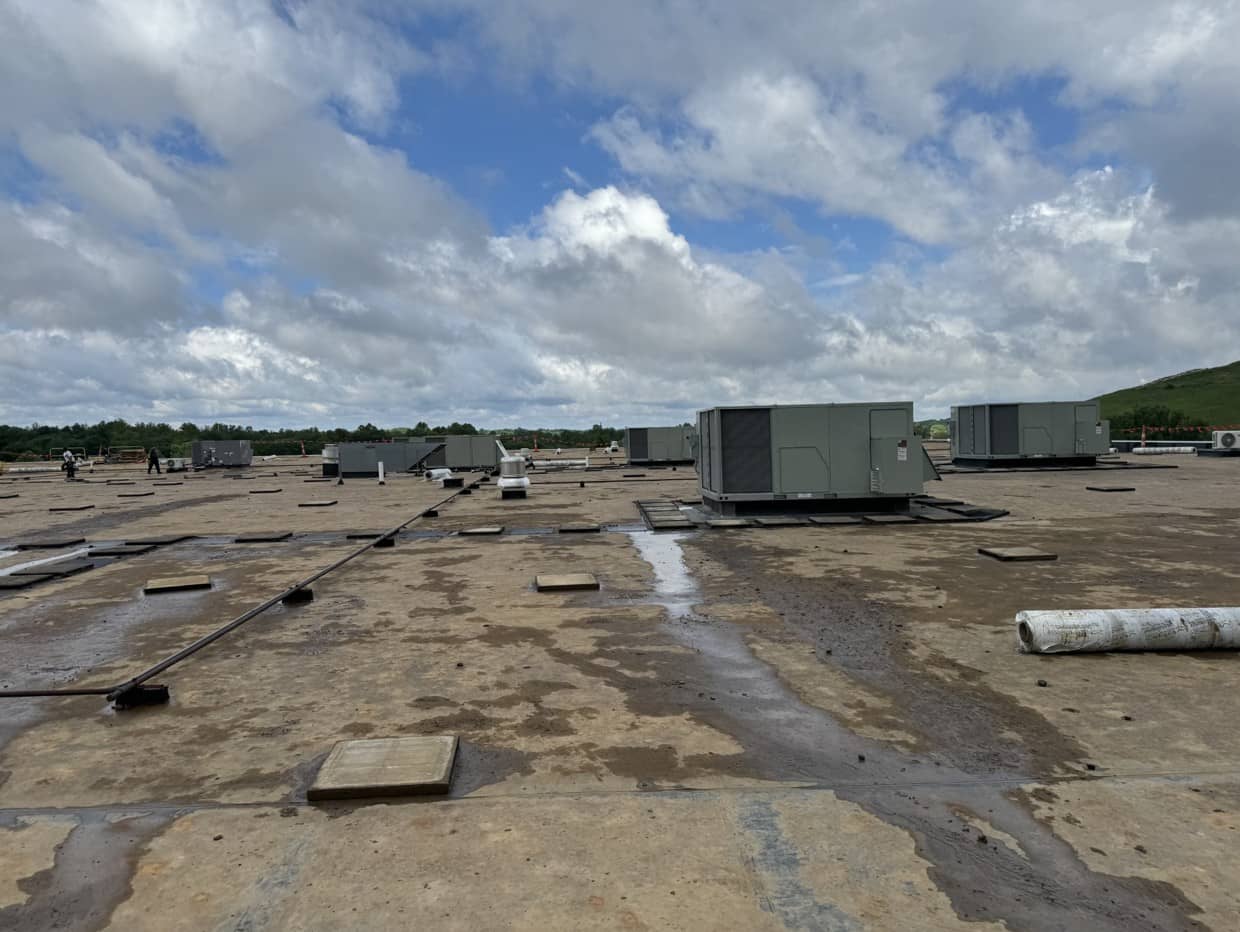
Flat commercial roofs, which are often covered by single-ply membranes like TPO (thermoplastic polyolefin) or EPDM (ethylene propylene diene monomer rubber), face brutal freeze-thaw conditions. Regular temperature shifts test your roof’s material and seams, especially as systems age.
Common signs of freeze-thaw damage for roofing includes:
Split seams
Cracks or fissures in the membrane
Surface cracks (also called “alligatoring”)
Interior water stains and leaks
Bubbling or blistering
Shrunken flashing
Why it matters:
Roof system warranties can last for 20-plus years depending on the material used, but problems can still occur. Regular inspections can help you address potential pain points before and after the freeze-thaw season. This process can help you invest in more cost-effective repair solutions if needed to help extend the lifespan of your roof.
Concrete and Asphalt
What happens:
Both concrete and asphalt are full of tiny pores and micro-cracks. Those tiny spaces are enough for water to intrude and expand. That internal pressure causes progressive deterioration that is only worsened by de-icing salts during Northeast Ohio’s harsh winters.
Common signs of freeze-thaw damage for concrete includes:
Scaling
Spalling
Flaking
Crumbling
Bulging
Why it matters:
When left unchecked, freeze-thaw turns minor concrete vulnerabilities into major defects. Even if you can’t spot any signs of damage, freeze-thaw can cause cracking within the concrete mass. These issues can lead to structural settling, leaks, and other defects that are both visual eyesores and safety hazards.
How to address it:
Keep water out of and off your concrete as much as possible. That process includes fixing drainage, sealing surfaces, and filling cracks well before winter. If you need commercial concrete services or asphalt solutions, invest in high-quality materials and techniques appropriately designed for Northeast Ohio weather, such as using a lower water-to-cement ratio to reduce permeability and improve long-term durability
Caulking and Sealants
What happens:
In a climate like Northeast Ohio, these sealants constantly expand and contract with temperature changes. Repeated freeze-thaw cycles and temperature swings can cause sealants to dry out, shrink, or lose adhesion.
Common signs of freeze-thaw damage for caulking and sealants includes:
Cracks or splits along the caulk line
Gaps or voids
Curling or pulling away from the surface
Brittle texture
Discoloration
Water stains around interior frames or sills
Why it matters:
Caulking and sealants are one of the primary barriers to water and air. Once they fail, moisture can seep in and cause hidden damage, including mortar degradation, mold growth, and rusting. Extreme issues can even lead to the need for window replacements, interior finish damage, and façade repairs.
How to address it:
Have your caulking and sealants inspected regularly. Everything from window seals to sidewalk joints should be checked to keep your property safe from moisture infiltration. Any new caulk or sealants should also be strategically chosen based on location. For example, silicon is a great fit for applications that require UV resistance and the ability to resist movement.
Masonry
What happens:
Bricks, blocks, and other forms of masonry are highly susceptible to moisture. These walls can absorb and hold moisture, allowing them to get soaked before a quick freeze forces all that water to expand, especially for surfaces that face prevailing winds.
Common signs of freeze-thaw damage for masonry includes:
Joint cracks
Spalling
Flaking
Bulging
White residue
Interior plaster stains or flaking paint
Why it matters:
Compromised masonry can lead to structural issues, safety hazards, and aesthetic problems. Mortar that continues to deteriorate can loosen bricks, destabilize walls, and impact other systems within your building and lead to a major rehabilitation project that will cost you a lot of time and money.
How to address it:
Tuckpointing can help you repair mortar joints before they become an issue. Have your building envelope inspected regularly, with annual checks allowing a professional to identify issues before they spread. Water-resistant bricks, such as Grade SW (severe weathering) bricks can help Northeast Ohio buildings withstand the regular impact of rain and snow.
Why You Shouldn’t Wait to Address Freeze-Thaw Risks
If you think the best way to save money is to hold off on maintenance, guess again. The best way to avoid costly construction costs is to avoid them altogether.
“Reactionary services are at least 30% more expensive than preventative,” Michael explains. “Most people want to call about a reactionary maintenance issue, but taking a preventative approach allows you to get ahead of those issues so that you protect your building, maximize your investment, and maintain property value.”
Protect Your Building from Freeze-Thaw with Southwest Companies
The freeze-thaw cycle isn’t a one-time event; it’s a seasonal, repeatable stress test that exploits small weaknesses in commercial buildings. Because Southwest self-performs painting, roofing, concrete, caulking, asphalt, and tuckpointing, we can address your entire envelope in a single plan and help you beat reactionary costs and reduce emergencies.
Ready to beat the Northeast Ohio weather? Contact SWC for a walkthrough and a maintenance plan that fits your budget.
Don’t wait for damage to show. See how preventative painting saves money, reduces risk, and extends the life for commercial buildings in Northeast Ohio.
Don’t wait for damage to show. See how preventative painting saves money, reduces risk, and extends the life for commercial buildings in Northeast Ohio.