Building Materials at Risk
Every part of a commercial building’s exterior can fall victim to freeze-thaw damage. Once that moisture gets inside the building envelope, it can then cause issues throughout your structure.
Below, we break down the key areas at risk, what can go wrong, and how to mitigate the damage.
Exterior Paint and Protective Coatings
What happens:
Fluctuating winter temperatures can cause paint to crack or peel if it can’t handle regular expansion and contraction. The resulting damage can create tiny openings that allow moisture to seep into your building envelope and create more damage.
Common signs of freeze-thaw damage on painted exteriors include:
- Cracking
- Flaking
- Peeling
- Blistering
- Exposed substrates
Why it matters:
Commercial painting may seem like a purely cosmetic service, but it actually serves as a protective skin for your building. Once paint fails, the substrate takes on water. That intrusion accelerates rust on steel, rot in wood, and spalling in masonry, which all raise the stakes from a paint project to a building-envelope repair.
How to address it:
Treat paint as a waterproofing layer and plan for preventative painting to protect your building. Most commercial paint systems will last between 7 to 10 years, but it’s a good idea to have your paint checked earlier than that to spot early issues and prevent problems. This is especially true in Northeast Ohio where the weather can degrade paint films more quickly than other regions
Roofing (TPO, EPDM, etc.)
What happens:
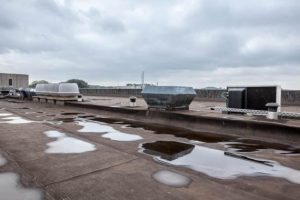
Flat commercial roofs, which are often covered by single-ply membranes like TPO (thermoplastic polyolefin) or EPDM (ethylene propylene diene monomer rubber), face brutal freeze-thaw conditions. Regular temperature shifts test your roof’s material and seams, especially as systems age.
Common signs of freeze-thaw damage for roofing includes:
- Split seams
- Cracks or fissures in the membrane
- Surface cracks (also called “alligatoring”)
- Interior water stains and leaks
- Bubbling or blistering
- Shrunken flashing
Why it matters:
Roof system warranties can last for 20-plus years depending on the material used, but problems can still occur. Regular inspections can help you address potential pain points before and after the freeze-thaw season. This process can help you invest in more cost-effective repair solutions if needed to help extend the lifespan of your roof.
Concrete and Asphalt
What happens:
Both concrete and asphalt are full of tiny pores and micro-cracks. Those tiny spaces are enough for water to intrude and expand. That internal pressure causes progressive deterioration that is only worsened by de-icing salts during Northeast Ohio’s harsh winters.
Common signs of freeze-thaw damage for concrete includes:
- Scaling
- Spalling
- Flaking
- Crumbling
- Bulging
Why it matters:
When left unchecked, freeze-thaw turns minor concrete vulnerabilities into major defects. Even if you can’t spot any signs of damage, freeze-thaw can cause cracking within the concrete mass. These issues can lead to structural settling, leaks, and other defects that are both visual eyesores and safety hazards.
How to address it:
Keep water out of and off your concrete as much as possible. That process includes fixing drainage, sealing surfaces, and filling cracks well before winter. If you need commercial concrete services or asphalt solutions, invest in high-quality materials and techniques appropriately designed for Northeast Ohio weather, such as using a lower water-to-cement ratio to reduce permeability and improve long-term durability